
Har Mod ki Kahani
Udaipur
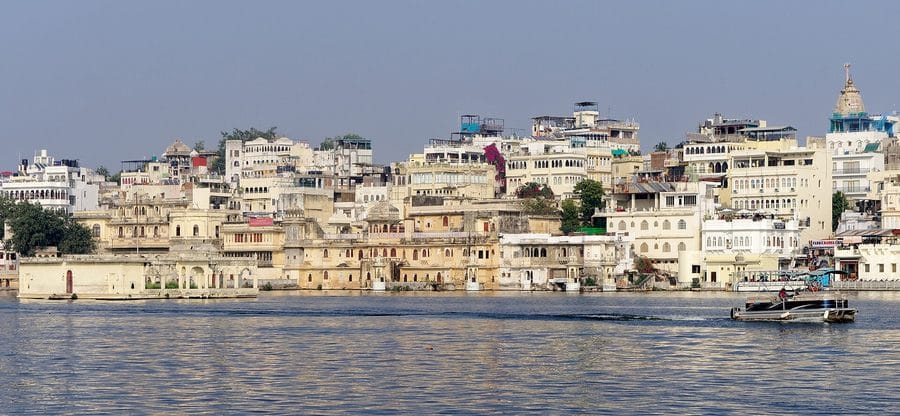
Udaipur, the city of lakes, was founded in 1553 by Maharana Udai Singh II. After the Mughal emperor Akbar took Chittorgarh, the Maharana laid out a new and safer capital for Mewar among the sheltering hills of the Aravallis. Ringed by water, ridgelines and marble palaces, the city still seems to tell Mewar's story of courage in every lane you wander down.
The stories
6 places, and what happened at each
City Palace
History & legendThe foundations of the City Palace are usually dated to 1559, when they were laid by Maharana Udai Singh II. Local lore says that while hunting in the Aravalli hills he met a sage, who advised him to build on this very ridge and promised that whatever rose here would always remain safe. And so, the story goes, he did. Spread along the hilltop, the palace stands as a witness to the sheer nerve of Mewar's rulers, and its museum is said to guard the armour and sword long attributed to Maharana Pratap.
Lake Pichola and Lake Palace
History & legendLake Pichola is said to date from the fourteenth century, by tradition to the reign of Maharana Lakha, though sources differ. The story goes that a banjara named Pichhu dug it in memory of his bullocks; Maharana Udai Singh later widened it considerably. The Lake Palace, or Jag Niwas, floating at its centre carries an equally charming tale. Maharana Jagat Singh II, it is said, was refused permission to hold his moonlit parties in his father's palace, so he sulked off and raised his own white water palace mid-lake, now often called the world's most romantic hotel.
Jag Mandir
History & legendJag Mandir, set on an island in Lake Pichola, was begun by Maharana Amar Singh and completed by Maharana Jagat Singh. Its best-known chapter belongs to the Mughal prince Khurram, later Emperor Shah Jahan. When Khurram rose in revolt against his father Jahangir, Maharana Karan Singh gave him shelter in this island palace. By a much-loved local tradition, the delicate marble work and rounded domes he lived among here stayed with the prince and shaped the vision that eventually became the Taj Mahal — a story Udaipur tells fondly, though no record confirms it.
Saheliyon-ki-Bari
History & legendSaheliyon-ki-Bari was built by Maharana Sangram Singh II. The tale attached to it is that a princess of Udaipur came with forty-eight young companions as part of her dowry, and that this garden was laid out especially for the women of the royal household and those forty-eight friends. Far from the noise of the city, among spraying fountains, lotus-filled pools and thick greenery, they could pass their hours together in peace. Walking through it today, that same unhurried calm still lingers under the trees.
Sajjangarh Palace (Monsoon Palace)
History & legendPerched on Bansdara hill, Sajjangarh Palace is among Udaipur's best-known royal buildings. Maharana Sajjan Singh began it in 1884, and it was still unfinished when he died that December. By tradition he meant it as an astronomical centre, a place from which the movement of clouds could be watched and the monsoon predicted with some accuracy; that plan, it is said, went with him. The palace found its own purpose all the same. Visitors climb up today to watch rain clouds drift past at eye level and to catch the sun setting over the city below.
Fateh Sagar Lake
HistoryFateh Sagar Lake is said to have been first built in the late seventeenth century by Maharana Jai Singh, but heavy floods breached its dam and the water drained away. Years later Maharana Fateh Singh had it rebuilt, and the lake has carried his name ever since. An island garden at its centre, Nehru Garden, draws visitors who cross by boat for an hour of shade and quiet, and it is here at Fateh Sagar that India's well-known solar observatory stands, keeping a steady watch on the sun.
Keep going
Next on the road
Your Rajasthan Story Starts Here.
Tell us where you want to go. We will help you make the journey unforgettable.