
Har Mod ki Kahani
Dausa
Dausa is one of Rajasthan's most historic districts, fondly called the city of the gods. Its name is said to come from the Sanskrit dhau-sa, meaning as beautiful as heaven. Turn back the pages of history and you find that this was the first capital of the Kachhwaha dynasty. Today its stepwells, hilltop forts and miracle-working temples draw travellers just as powerfully as they once drew kings.
The stories
6 places, and what happened at each
Chand Baori
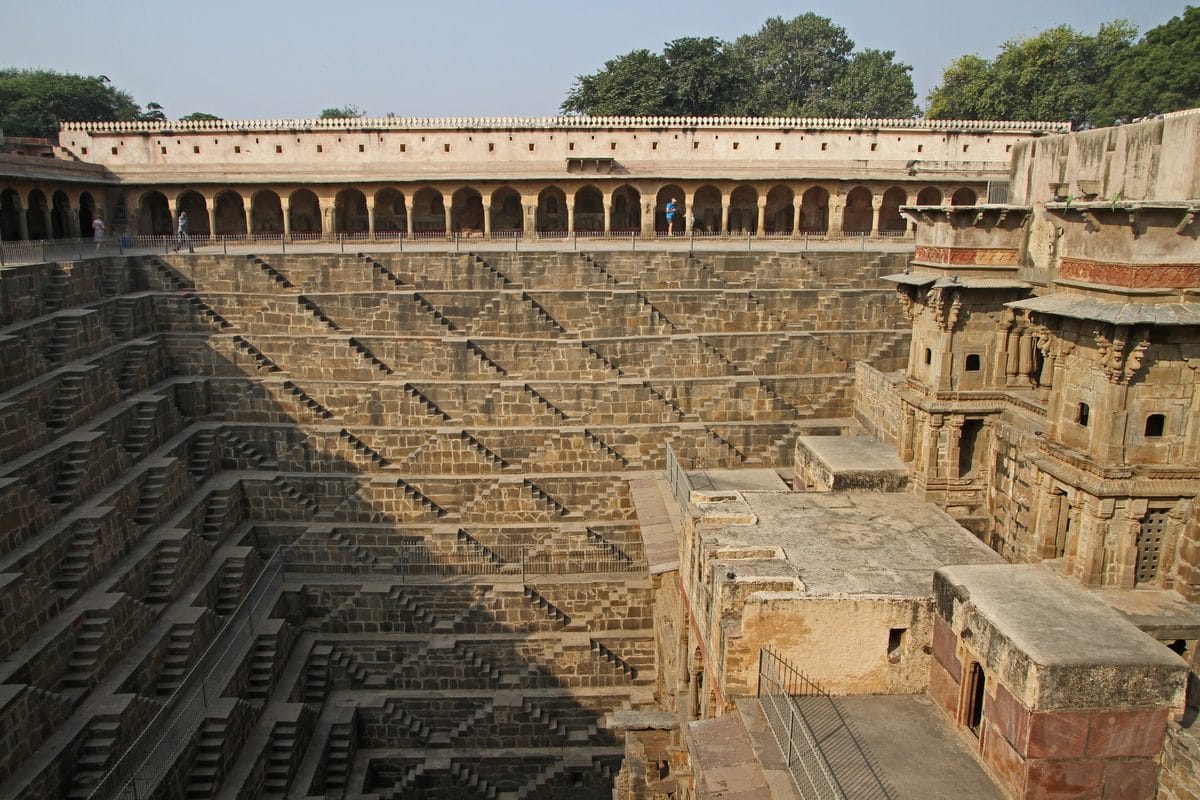
History & legendThe Chand Baori at Abhaneri counts among the deepest and largest stepwells in India. Roughly 3,500 narrow steps fall away through thirteen storeys, arranged with the precision of sculpture — small wonder that films such as Bhool Bhulaiyaa and Paheli chose it as a backdrop. It is said to have been built across the 8th and 9th centuries, and tradition credits Raja Chanda of the Nikumbh dynasty. The village was once Abha Nagri, the city of brightness, a name that softened into Abhaneri. Local lore insists the king raised the well in a single night with supernatural help, so drought would never leave his people thirsty.
Harshat Mata Temple
History & legendA few steps from Chand Baori stands the temple of Harshat Mata, whose architecture is dated by scholars to the eighth or ninth century. Even in its damaged state the carving hints at how splendid the shrine must once have been. By tradition it was badly hurt during Mahmud of Ghazni's invasion, when much of the structure came down, yet its beauty has never quite faded. The temple honours Harshat Mata, revered as the goddess of joy and cheer. Villagers still hold that her radiance kept the whole settlement glowing, and that prosperity here flows from her blessing; people come with the same hopes today.
Mehandipur Balaji Temple
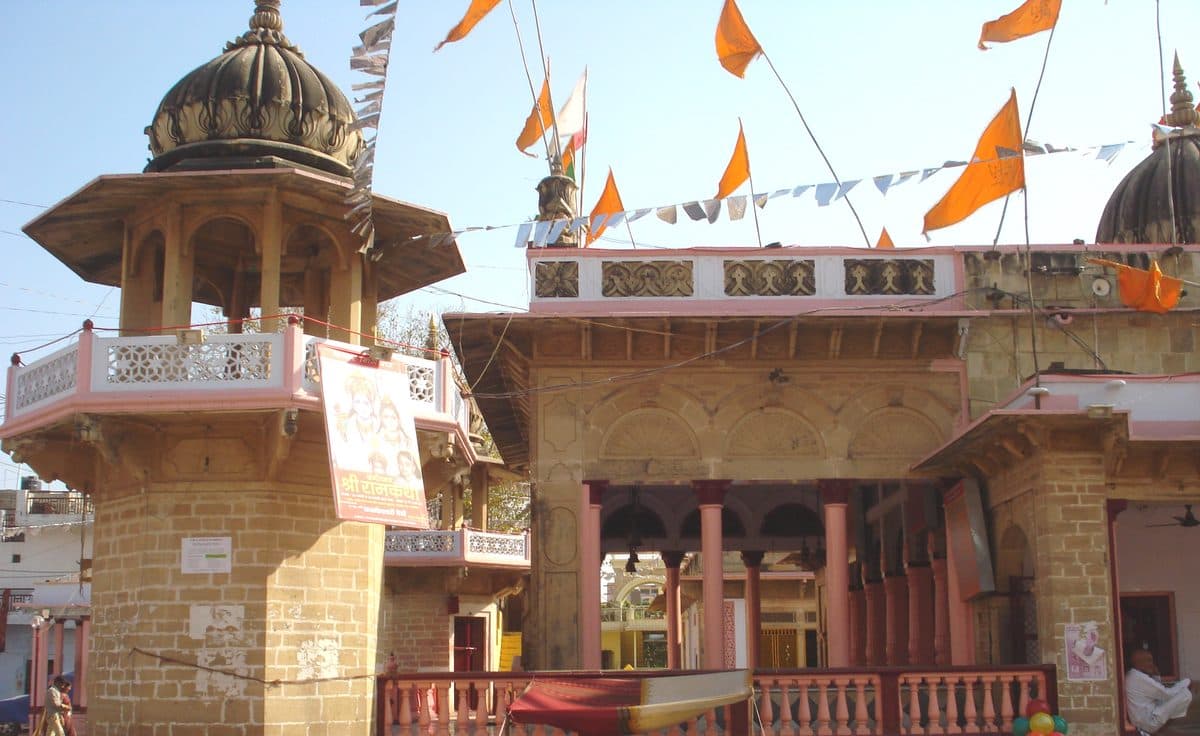
LegendMehandipur Balaji is reckoned among India's best-known Hanuman temples, and is said to draw hundreds of thousands of pilgrims from across the country and beyond. People arrive here for reasons unlike those at any ordinary shrine — seeking release from possession, nameless fear and mental torment. Believers say no one installed the image of Balaji at all: it emerged from the hillside of its own accord. Two customs go with that belief rather than with any temple rule: many devotees will not carry the prasad home, and by tradition none glance back while leaving, lest whatever they came to shed should follow them out.
Dausa Fort
History & legendRising on Devgiri hill, Dausa Fort announces the town long before you reach it. The hill beneath it has the shape of a soop, the winnowing basket used in every Rajasthani kitchen, and locals point it out with obvious pride. Tradition credits the earliest fort here to the Badgurjar rulers. It is said that Dulha Rai, who founded Kachhwaha rule in this region, received Dausa in dowry; the town became the Kachhwahas' first capital, though the seat of power soon moved elsewhere. By local account, below the ramparts stands the temple of Surajmal Bhaumia, still worshipped and still called, with affection, the king of Dausa.
Bhandarej Baori
History & legendAbout ten kilometres from Dausa, the village of Bhandarej keeps a stepwell that shows how thoroughly this dry country once understood water. Flight after flight of steps drops into the cool dark, and each level carries carving of its own; it is said to run five storeys deep. Sculptures and pottery recovered here speak of an old and prosperous culture. By tradition the village's story reaches back to the age of the Mahabharata, and Bhandarej is identified with the ancient settlement of Bhadrawati. Hidden tunnels are said to run off the stepwell too, escape routes for whenever the region was at war.
Jhajhirampura
History & legendRich in natural springs, Jhajhirampura is the corner of Dausa where visitors say the mind settles by itself; the place is said to be ringed by hills as well. Water threads its way down through the rock and pours steadily from a stone gaumukh; summer or winter, the flow never stops. The shrine here is dedicated to Shiva and to his Rudra forms. Pilgrims hold that a dip in the natural pool clears skin ailments and lifts the weight of worry from the mind as well. It is that faith, more than anything, that keeps drawing people back to this quiet place.
Keep going
Next on the road
Your Rajasthan Story Starts Here.
Tell us where you want to go. We will help you make the journey unforgettable.