
Har Mod ki Kahani
Rajsamand
Rajsamand district, cradled by the Aravallis, is Mewar country: proud history, warrior legend and wide, calm water. It takes its name from the great lake raised here by Maharana Raj Singh I. Between the unbeaten ramparts of Kumbhalgarh, the battlefield pass of Haldighati and the temple towns of Nathdwara and Kankroli, almost every stop in the district comes with a story attached.
The stories
6 places, and what happened at each
Rajsamand Lake and Nau Chauki Pal
History & legendMaharana Raj Singh I raised this lake between 1662 and 1676, less as an ornament than as famine relief: it gave paid labour to people ruined by drought, and is remembered as Rajasthan's oldest known relief work. Local lore says the embankment collapsed again and again until Ghevar Bai of Malwa laid the foundation stone; her shrine is said to stand on the shore. The dam is called Nau Chauki for its nine carved pavilions, and twenty-five black marble slabs carry the Rajprashasti, said to be India's largest stone inscription. Seaplanes once landed here on the London-Sydney route, and the Second World War made it an auxiliary air base.
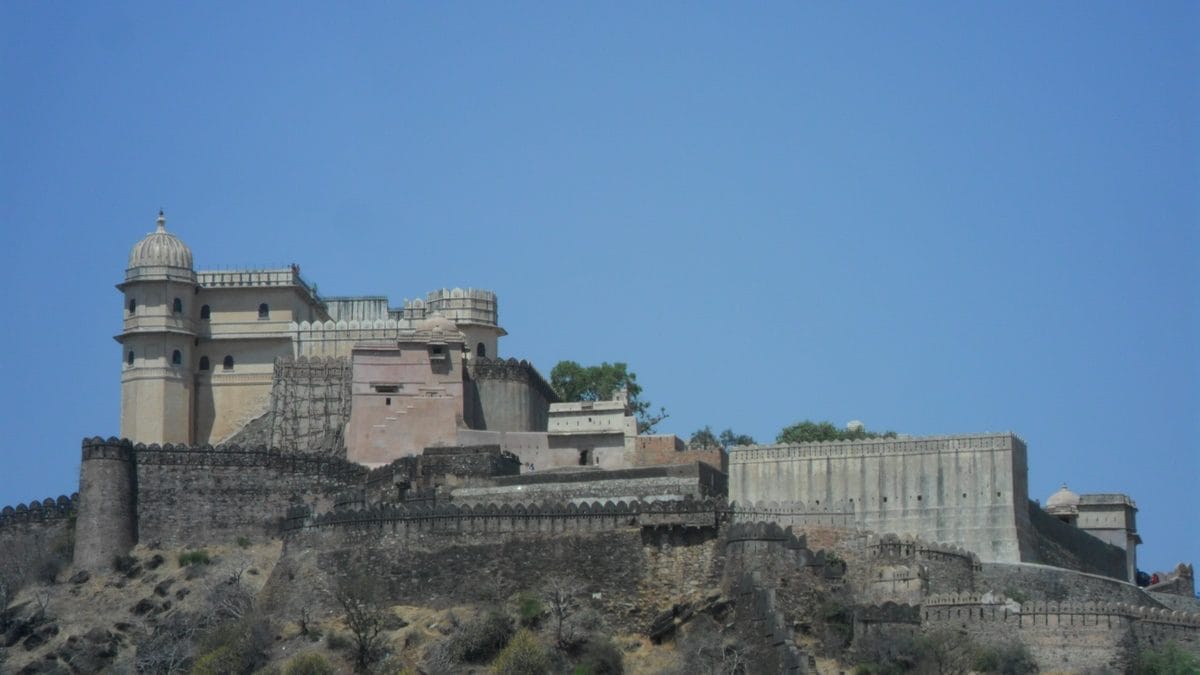
Kumbhalgarh Fort
History & legendHigh in the hills of Mewar, Maharana Kumbha raised this fortress, and it belongs to all of India rather than to Rajsamand alone. Its perimeter wall runs for roughly 36 kilometres, and is often called the second longest on earth after the Great Wall of China — an epithet more loved than proven. Locals say it is broad enough for eight horses to gallop side by side. Assault after assault broke against it, which earned it the name of the unconquerable fort, though it did fall once, to Akbar's six-month siege in 1578. By tradition, Maharana Pratap was born inside these walls.
Haldighati
History & legendThe pass takes its name from the earth itself, which carries the yellow of turmeric. In 1576 this narrow defile saw one of the fiercest encounters between Mewar and the Mughals, Maharana Pratap facing Akbar's army under Man Singh. The tale most retold here is that of Chetak: tradition holds that, with his master wounded, the loyal horse carried him clear of the enemy and over a wide stream, then died on the far bank. A graceful memorial to him stands nearby. Close by lies Rakt Talai, remembered as the ground where the fighting was bloodiest.
Shrinathji Temple, Nathdwara
History & legendNathdwara's great temple honours Krishna in his child form, Shrinathji, and draws devotees from across the world. The story goes that when temples were being pulled down in Aurangzeb's time, the image was lifted from Govardhan hill in Braj, near Mathura, and sent off by bullock cart in search of safer ground. Near Rajsamand, at the village of Sihad, a wheel sank into the earth and no coaxing would move the cart another yard. The priests, tradition says, read this as the deity choosing his own home, and the shrine was raised on that spot; the village is Nathdwara today.
Dwarkadhish Temple, Kankroli
HistoryAt Kankroli, on the shore of Rajsamand Lake, stands another major seat of the Pushtimarg Vaishnav tradition. Like the image of Shrinathji, the Dwarkadhish idol is said to have been carried here from the Mathura region to keep it safe from Mughal attacks. Vallabhacharya's descendants brought the deity and enshrined it, while Maharana Raj Singh, whose lake was then taking shape, gave them land and shelter; by most accounts the shrine reached this spot only after the lake was finished. At darshan hours the bells, the gathered devotees and the wide sheet of water beyond the ghats settle into a calm that is hard to describe.
Piplantri Village
HistoryAway from forts and palaces, this small village in Rajsamand is known around the world for a custom of its own. Whenever a daughter is born in Piplantri, the villagers come together to plant 111 saplings in her name, a practice they have kept up for years. Care for the environment and a determination to welcome girls are braided into a single ritual. Lakhs of trees have gone into the ground so far, and they have changed the face of the whole area, which is why people now travel from far away to see it.
Keep going
Next on the road
Your Rajasthan Story Starts Here.
Tell us where you want to go. We will help you make the journey unforgettable.