
Har Mod ki Kahani
Chittorgarh
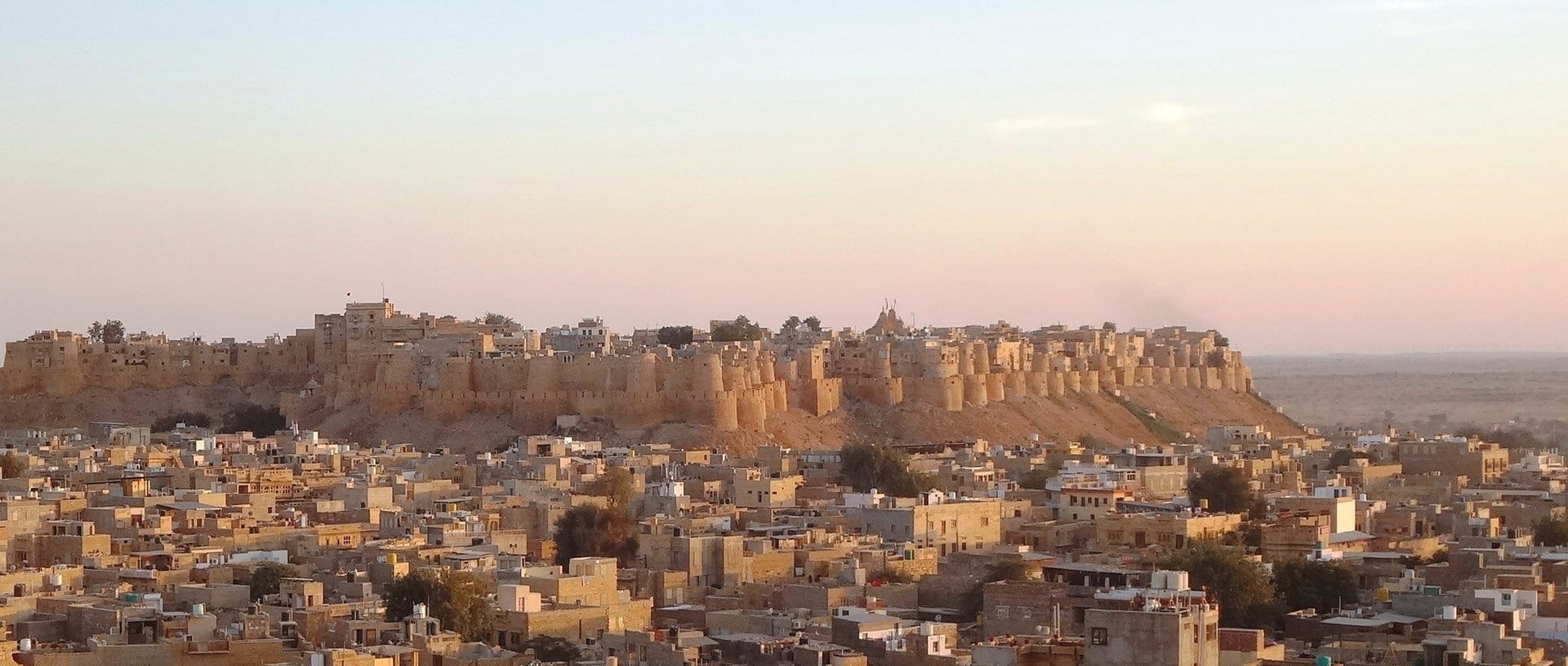
Chittorgarh holds the largest fort in India, spread across some 700 acres on a hill above the plain, and the heaviest history in Rajasthan. It was sacked three times, and three times the women of the fort chose the fire over capture. What survives is a victory tower, a palace where a wet nurse gave up her own son, and the temple of a queen who walked away from all of it to sing.
The stories
8 places, and what happened at each
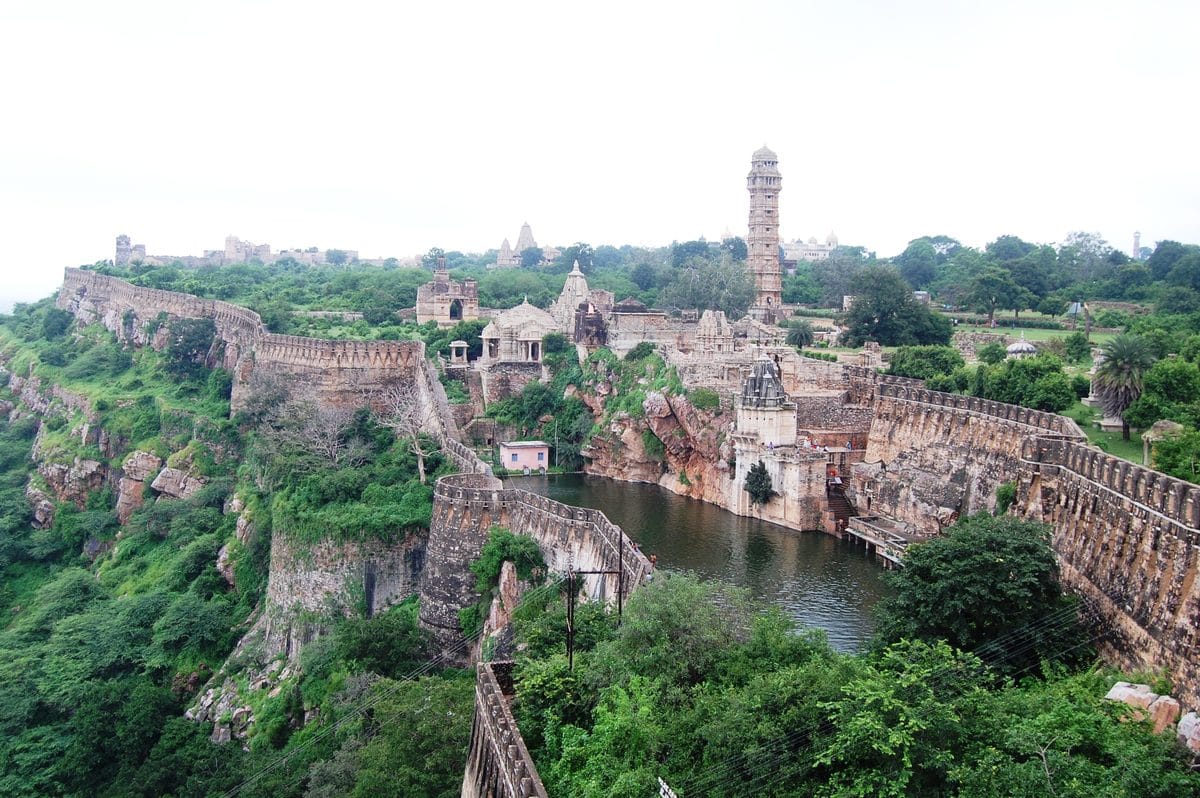
Chittorgarh Fort
HistoryChittorgarh is often said to be the largest and grandest fort in India, and the sagas of Rajput valour, renunciation and sacrifice feel built into its walls. It rises on a hill about 180 metres high and sprawls across roughly 700 acres: palaces, towers, tanks and temples laid out like a town of its own. Every gateway and ruin recalls the days when generations of Mewar staked everything they had on holding this rock, and the tales told here are among the most famous in Rajasthan.
Vijay Stambh
HistoryThe Vijay Stambh, the Tower of Victory, is Chittorgarh's signature. Maharana Kumbha raised it in the fifteenth century — 1448 is the year most often given, though the sources disagree — and it is said to mark his triumph over the combined armies of the sultans of Malwa and Gujarat. Nine storeys tall, it is dedicated to Vishnu, and the carving that covers every level is considered a peerless example of Indian architecture. Climb the narrow inner stairway and the whole fortress opens out below, which is rather the point of a monument built both to be seen and to see from.
Mahasati Jauhar Sthal
History & legendThis ground inside Chittorgarh Fort witnessed both the proudest and the most harrowing chapters of the city's past. Here Rajput women walked into the flames rather than surrender their honour, and the fort records three great jauhars. The first, in 1303, lives in legend: it is said Rani Padmini led sixteen thousand women when Alauddin Khilji took the fort. The second followed in 1535 under Rajmata Karmavati, with thirteen thousand women, as Sultan Bahadur Shah of Gujarat attacked. The third came in 1568 as Akbar's army closed in; tradition names Rani Phool Kanwar at its head. Only silence remains.
Rani Padmini Palace
History & legendA three-storey white palace set in the middle of a water tank, this is the most talked-about building in Chittorgarh Fort. The story goes that when Alauddin Khilji, the sultan of Delhi, heard tell of Rani Padmini's beauty, he grew desperate to see her. Rawal Ratan Singh, the tale runs, allowed him nothing more than a reflection, glimpsed in a great mirror placed opposite the palace. That single fleeting image, the legend says, sharpened his greed, and soon afterwards his army marched on Chittorgarh.
Gaumukh Kund
History & legendInside Chittorgarh Fort lies a tank fed by an unfailing spring, which has quenched the fort's thirst for centuries. Water runs endlessly from a cow's mouth shaped in the rock, and that shape gave the tank its name, Gaumukh. In older times, it is said, the queens and the women of the royal household came down to bathe here through a hidden tunnel that led from their palaces, so that no outside eye would fall on them. An ancient Shiva temple stands close by, at the edge of the water.
Rana Kumbha Palace
History & legendThis is often called the oldest and largest palace complex in Chittorgarh Fort. Maharana Udai Singh, the founder of Udaipur, was born within these walls. Tradition holds that it was here too that Panna Dhai, the prince's fiercely loyal nurse, gave up her own son Chandan in his place so that the boy Udai Singh might live, a sacrifice Mewar has never forgotten. Beneath the palace lie the underground cellars still pointed out to visitors, remembered in legend as the place where the jauhar took place.
Meera Temple
History & legendWithin the compound of the Kumbhashyam temple — traditionally said to have been built by Maharana Kumbha — stands a small and unusually lovely shrine dedicated to Meerabai. Married to Prince Bhojraj of Mewar, Meera gave her heart not to the court but to Krishna, and she is remembered singing here for hours on end, lost in devotion. The best-known tale about her holds that a cup of poison sent to end her life turned to nectar in her hands by Krishna's grace, a story still told at this doorway.
Kirti Stambh
HistoryThe Kirti Stambh, or Tower of Fame, rises twenty-two metres and is usually described as seven storeys, though the count varies between sources. It is said to have been raised in the twelfth century by Jijaji Kathod, a Digambara Jain merchant, though that date is disputed. The tower is dedicated to Adinath, the first Tirthankara of the Jain faith, and figures of the Digambara tradition are carved in fine detail across its walls. It draws far smaller crowds than the Tower of Victory nearby, which makes it the quietest and, for anyone who loves stonework, perhaps the most rewarding corner of the fort.
Keep going
Next on the road
Your Rajasthan Story Starts Here.
Tell us where you want to go. We will help you make the journey unforgettable.