
Har Mod ki Kahani
Bhilwara
Bhilwara is known across Rajasthan as the textile city, yet its real wealth lies in its history and living folk culture. The town is said to take its name from the Bhil tribe who settled here, the same clansmen who once stood beside Maharana Pratap in his struggle against Akbar. Around it lie forts, waterfalls, temples and a revered gurudwara, each carrying a story of its own.
The stories
7 places, and what happened at each
Menal Waterfall and Mahanaleshwar Shiva Temple
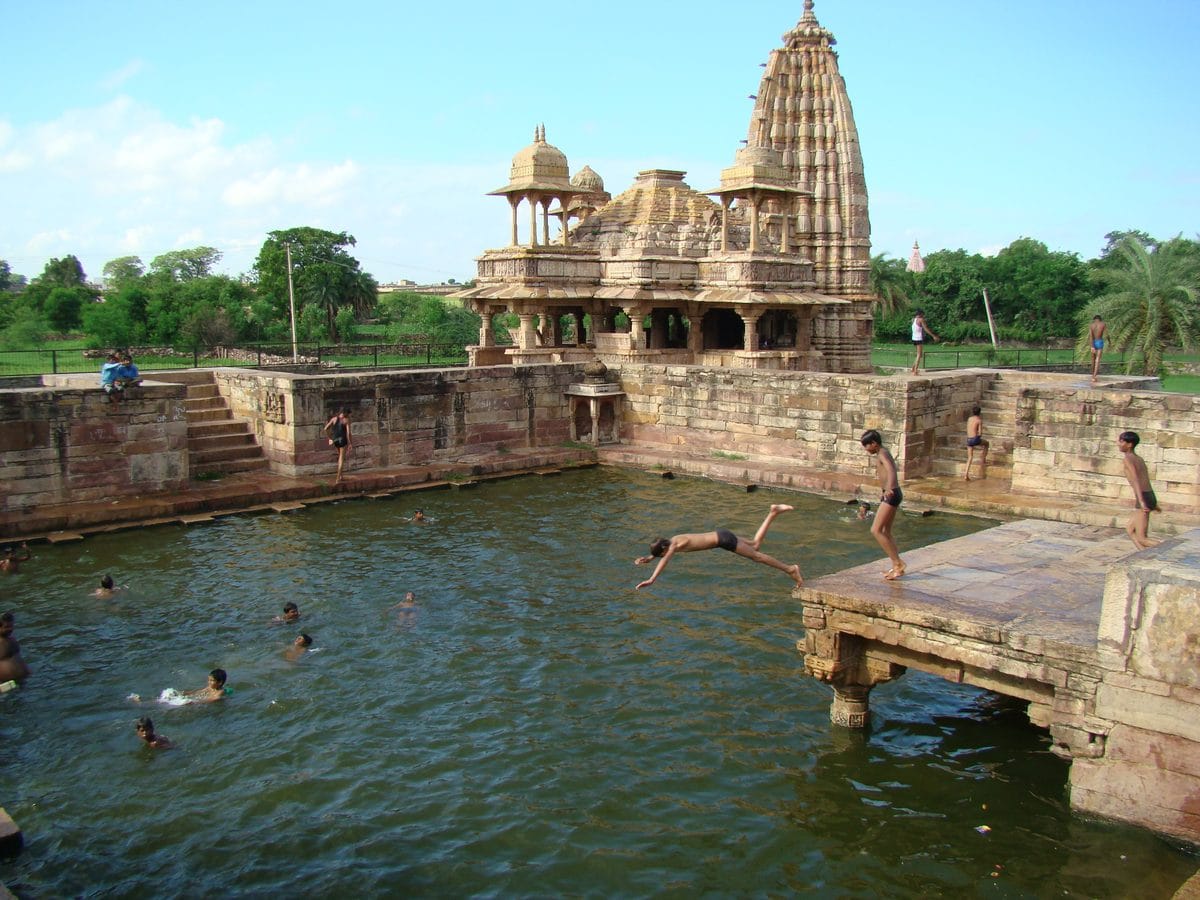
History & legendMenal sits about 80 kilometres from Bhilwara on the Kota road, where landscape and history meet. In the twelfth century this tract lay under the Chahamana, or Chauhan, dynasty. Local tradition holds that Prithviraj Chauhan loved its cool, quiet ravines so much that he raised a palace for himself here. A waterfall said to drop some 150 feet fills the gorge with sound. Beside it stands the Mahanaleshwar Shiva temple, built of finely carved ancient stone and so richly worked that visitors call it a miniature Khajuraho.
Harni Mahadev Temple
History & legendHarni Mahadev stands only a few kilometres from Bhilwara town — sources differ on exactly how many — cradled in green hills. Local belief holds that nobody installed the Shiva lingam here; it rose from the earth of its own accord. Tradition also links the shrine's building to ancestors of the Darak family, though no record fixes when. Every Mahashivratri a three-day fair fills the slopes, drawing worshippers from distant villages who come to pray and leave their wishes with the god. A Chamunda Mata temple stands close by on the same hillside, and most pilgrims bow at both.
Badnore Fort
History & legendSeventy kilometres or so from Bhilwara, a seven-storey fort crowns a hill at Badnor and still stands square against the sky. Tradition credits its founding to a Parmar ruler named Badna. For Mewar this was no mere residence but a key military post, and it was fought over again and again, changing hands between Mewar and the Mughals rather than holding out against them. Within are great gateways and temples, and, it is said, palaces and water tanks besides — Rajput architecture at its most confident, quietly recounting the splendour and courage of the rulers who once held this ridge.
Udan Chhatri, Pur
LegendIn Pur, a suburb of Bhilwara, the Udan Chhatri on Dev Dungri hill has puzzled onlookers for generations. It sits at the lip of a huge natural rock — accounts differ over whether the canopy was raised there or shaped by the stone itself — and from below it appears to hover, as though floating in the air. Some say that impression gave it the name; others tell a stranger tale, of a canopy passing through the sky that a saint brought down onto this hill. By tradition it has belonged to holy men ever since. It remains one of the district's true curiosities.
Bagore Sahib Gurudwara
History & legendIn Bagor village of Mandal tehsil stands a gurudwara that Sikh pilgrims hold especially dear. By tradition, Guru Gobind Singh, the tenth Guru, broke his journey here and rested a while on this soil; the halt lives in community memory rather than in any dated record. The shrine of Bagore Sahib is said to have been raised in memory of that visit and of the Guru's presence here. People of every faith still come to bow their heads, offer a prayer and carry away a sense of the blessing the place is believed to hold.
Kotri Charbhuja Temple
LegendSome thirty kilometres from Bhilwara, the village of Kotri keeps a much-loved temple of Vishnu in his Charbhuja form. Devotees across Rajasthan speak of it with unshakeable faith and fondly call the deity Shyam of Kotri. Folk tales insist that no wish made here goes unanswered. Every year on Jaljhulani Ekadashi an enormous fair gathers around the shrine, and Charbhujanath is carried out in procession through the town. By tradition the image travels on a chariot to a water body, where it is given a ceremonial bath before being brought home.
Bijolia
HistoryBijolia earns its place in the history books twice over. On one side stands the Mandakini temple with its cluster of Shiva shrines, said by tradition to date from the age of the Chauhan rulers, their walls carrying carving that rewards a slow walk. On the other, this same soil was the cradle of the Bijolia peasant movement, often described as the longest non-violent farmers' agitation in Indian history. The ancient rock records found here, known as the Bijolia inscription, are treasure for anyone with an appetite for the past.
Keep going
Next on the road
Your Rajasthan Story Starts Here.
Tell us where you want to go. We will help you make the journey unforgettable.