
Har Mod ki Kahani
Karauli
Karauli, in eastern Rajasthan, is known for its proud past, its carved architecture and its deep-rooted faith. The town was once called Kalyanpuri, founded in 1348 CE by the Yaduvanshi ruler Arjun Pal, and its royal house has always traced its descent directly from Lord Krishna. Red sandstone palaces, hillside shrines and centuries of local storytelling make it a rewarding stop for travellers exploring this corner of the state.
The stories
5 places, and what happened at each
Kaila Devi Temple
History & legendCradled by the Trikut hills on the bank of the Kalisil river, this shrine to Kaila Devi is revered as one of North India's best-known Shakti shrines. The tale told here reaches back to Krishna's birth: when Kansa tried to dash Devaki's eighth child against a stone, the girl slipped from his grasp, rose into the sky and revealed herself as the great goddess. Devotees believe that same Yogmaya settled here as Kaila Devi. The Lakkhi Mela held at the temple, and the Languriya songs sung by pilgrims, are said to be famous right across India.
Karauli City Palace
History & legendBuilt of red and white sandstone, Karauli's City Palace is said to date from the fourteenth century, though the grandeur that stands today is largely eighteenth-century work, credited to Raja Gopal Singh. Local tradition explains how it came to stand here. Raja Arjun Pal, out hunting, reached the bank of the Bhadravati river and saw a lion and a cow drinking side by side, with no fear or hostility between them. Reading it as a blessing, he is said to have laid his palace's foundation on that very spot, and with it the town of Kalyanpuri, known today as Karauli. Its courtyards, jharokhas and painted walls keep the story alive.
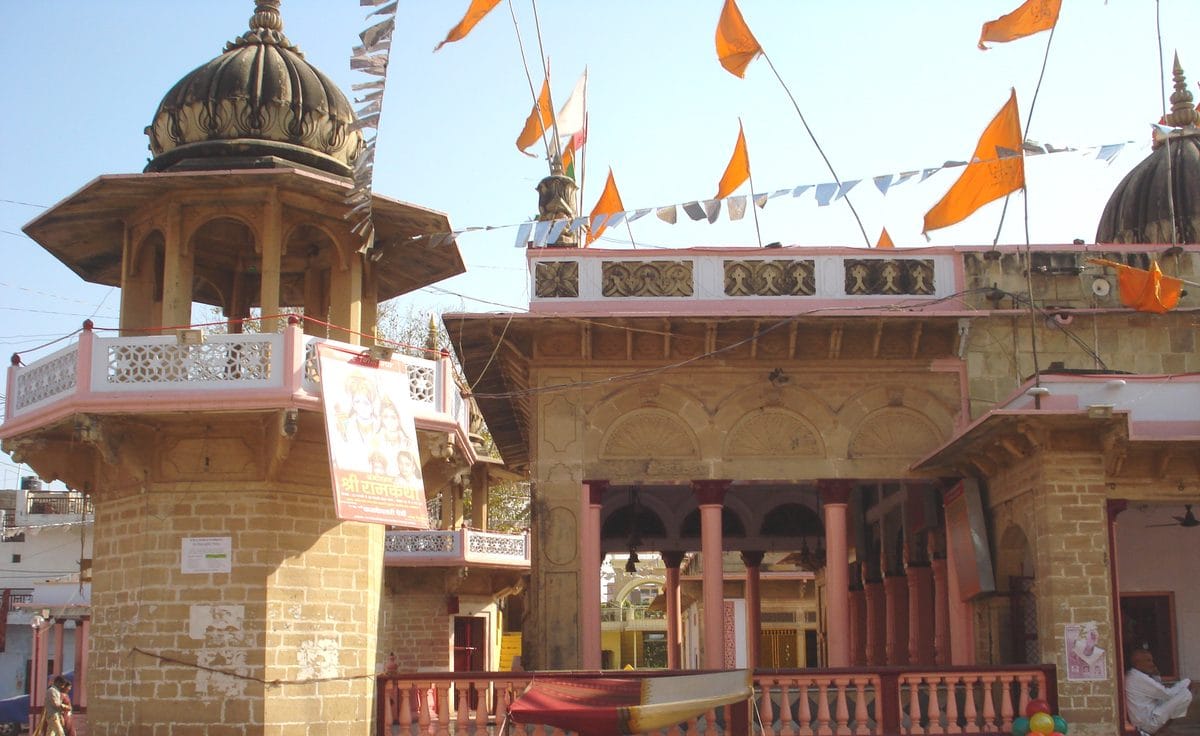
Madan Mohan Ji Temple
History & legendInside the walls of Karauli's City Palace stands the temple of Madan Mohan Ji, the town's most revered shrine to Krishna. The image worshipped here is said to have stood originally at Vrindavan; tradition holds that when Aurangzeb's campaign against temples put it at risk, it was carried to Jaipur for safekeeping. Later, Raja Gopal Singh of Karauli is believed to have seen the deity in a dream, after which — so the story goes — he brought the image to his own city with great ceremony and raised this handsome temple around it. Aarti and bhajans fill its courtyard through the day.
Timangarh Fort
LegendAbout forty kilometres from Karauli, Timangarh Fort stands in a silence that has fed stories for centuries. The one told most often is the tale of the tightrope walker's curse. A raja whom the storytellers call Timanpal is said to have promised a young nat performer half his kingdom if she could cross a rope strung between two hilltops. As she moved surefootedly towards the far side, courtiers who feared losing the wager cut the rope. Falling, she cursed the fort to crumble into rubble. Villagers nearby still say that old sculptures and hidden treasure lie buried in the earth around its ruins.
Shri Mahavirji Jain Temple
History & legendShri Mahavirji, in Karauli district, is one of the most celebrated pilgrimage centres of the Digambar Jain tradition, and its story begins with a mound. It is said that cows grazing nearby would let their milk flow of its own accord the moment they reached that patch of ground. Curiosity, the telling goes, finally led the village to dig there, and out of the earth came an image of Lord Mahavir, a coral-hued sandstone figure. The temple that stands here was raised after that discovery, and pilgrims travel from across the country to see the idol.
Keep going
Next on the road
Your Rajasthan Story Starts Here.
Tell us where you want to go. We will help you make the journey unforgettable.