
Har Mod ki Kahani
Jhunjhunu
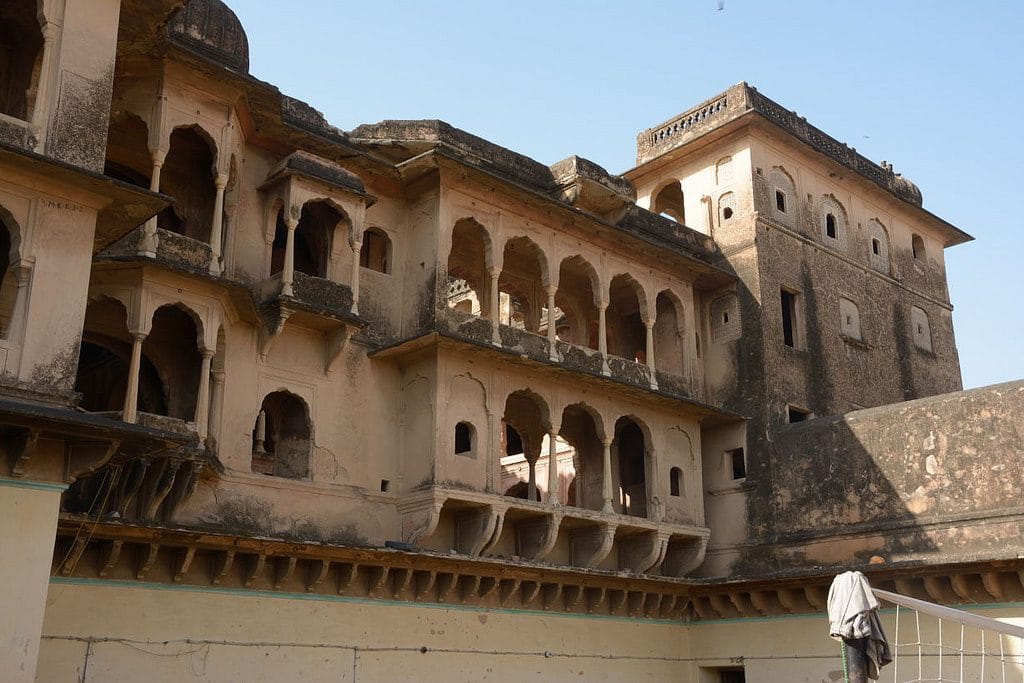
Set in Rajasthan's Shekhawati belt, Jhunjhunu is a town where the walls do the talking. Its old merchant mansions, painted inside and out with vivid frescoes, and its centuries-old forts have earned it admirers from across the world. Marwari trading wealth, the histories of Rajput and Kayamkhani rulers, and temples of deep local faith all sit side by side in these lanes.
The stories
6 places, and what happened at each
Rani Sati Temple
History & legendThis temple in Jhunjhunu town ranks among the largest and best known sati shrines in India. It is dedicated to Narayani Devi, whom devotees address affectionately as Dadi Ji. Local tradition holds that Uttara, wife of Abhimanyu in the age of the Mahabharata, was reborn as Narayani Devi. The same telling says that when her husband Tandhan Das was killed by treachery, she faced his attackers bravely before becoming sati on his funeral pyre. A shrine was raised on this spot in her memory, though accounts differ on how long ago, and pilgrims still travel great distances to reach it.
Khetri Mahal
History & legendStanding in the heart of Jhunjhunu, this palace is known locally as the town's own Hawa Mahal. It was raised by Maharaja Bhopal Singh of Khetri, and is usually dated to around 1770. Its most striking feature is what is missing: there are no windows and no doors at all, only ranks of pillars and arches through which the breeze drifts freely from one end of the building to the other, keeping the interior cool even in high summer. Tradition has it that Maharaja Sawai Pratap Singh of Jaipur was so taken with the design that he drew on it when commissioning Jaipur's celebrated Hawa Mahal.
Sone Chandi Ki Haveli
HistoryIn the village of Mahansar stands what many consider the most dazzling painted interior in all of Shekhawati. It was built in the nineteenth century by merchants of the Poddar family, and it is said to take its name from the real gold and silver worked into the colours on its walls and ceilings. Look up and you will find episodes from the Ramayana, scenes of Krishna at play and the incarnations of Vishnu, rendered so finely that visitors linger with their heads tilted back. More than a century and a half on, the lustre has still not dulled.
Badalgarh Fort
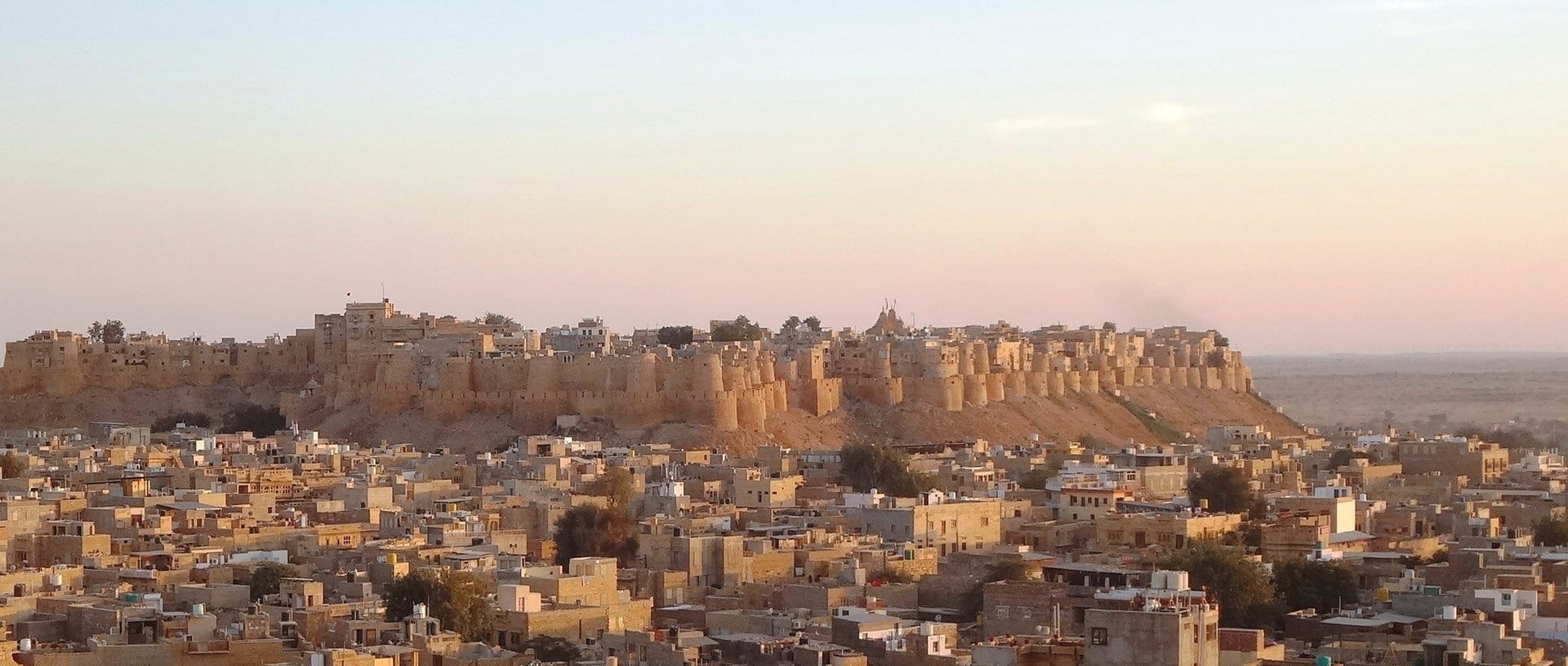
HistoryPerched on a high hill above the town, this fort was raised by the Kayamkhani nawab Fazal Khan. It is said the work was done towards the end of the seventeenth century, though sources differ. Jhunjhunu had earlier been held by Chauhan rulers before passing into the hands of the Kayamkhani nawabs. Tradition holds that the fort was built not for pleasure but as a stable for the nawab's camels and horses. Stand on its ramparts today and the whole of Jhunjhunu spreads out in a single view, at its loveliest in the last hour of daylight.
Dundlod Fort
HistoryThe fort at Dundlod is usually dated to 1750, built during the rule of the youngest son of Sardul Singh. Rajput and Mughal styles are said to blend through the building so smoothly that it is hard to say where one ends and the other begins. Its Diwan-e-Khas is the room visitors remember, said to have carved glass windows and a library of rare old volumes. The fort now works as a heritage hotel, so guests can sleep within the same walls and take away some taste of the courtly comfort its builders once enjoyed.
Modi and Tibrewala Havelis
HistoryThese twin mansions in Jhunjhunu are a mirror held up to the lives of Shekhawati's prosperous Marwari trading families. The paintings across their walls go well beyond gods and religious scenes: here you will find British-era railway trains and figures dressed in foreign clothes. Taken together, the two havelis show how closely the merchants of that period followed the wider world, and how much they enjoyed recording each new marvel on their own walls. Anyone with an eye for painting can happily lose an hour or two here.
Keep going
Next on the road
Your Rajasthan Story Starts Here.
Tell us where you want to go. We will help you make the journey unforgettable.