
Har Mod ki Kahani
Churu
Churu sits in Rajasthan's Shekhawati region and is known as the gateway to the Thar desert. Carved havelis, drifting dunes and old-world architecture give the town its face, but its real wealth lies in its stories. Every fort, lake and shrine here carries a tale of courage, sacrifice or devotion, and those tales carry a visitor back through the centuries.
The stories
5 places, and what happened at each
Churu Fort
History & legendChuru Fort is remembered for one extraordinary episode: the day silver was fired at an attacking army. Thakur Kushal Singh raised the fort, though the year is disputed and 1739 is only one of the dates given. In 1814 the forces of Bikaner laid siege to it while Thakur Shiv Singh and his men held the walls. Then, the story goes, the iron for casting cannonballs ran out. The town's goldsmiths, merchants and ordinary families carried their household gold and silver to the ruler's feet, and the blacksmiths moulded silver shot from it. Struck by such loyalty, the besiegers are said to have withdrawn in respect.
Sethani Ka Johara
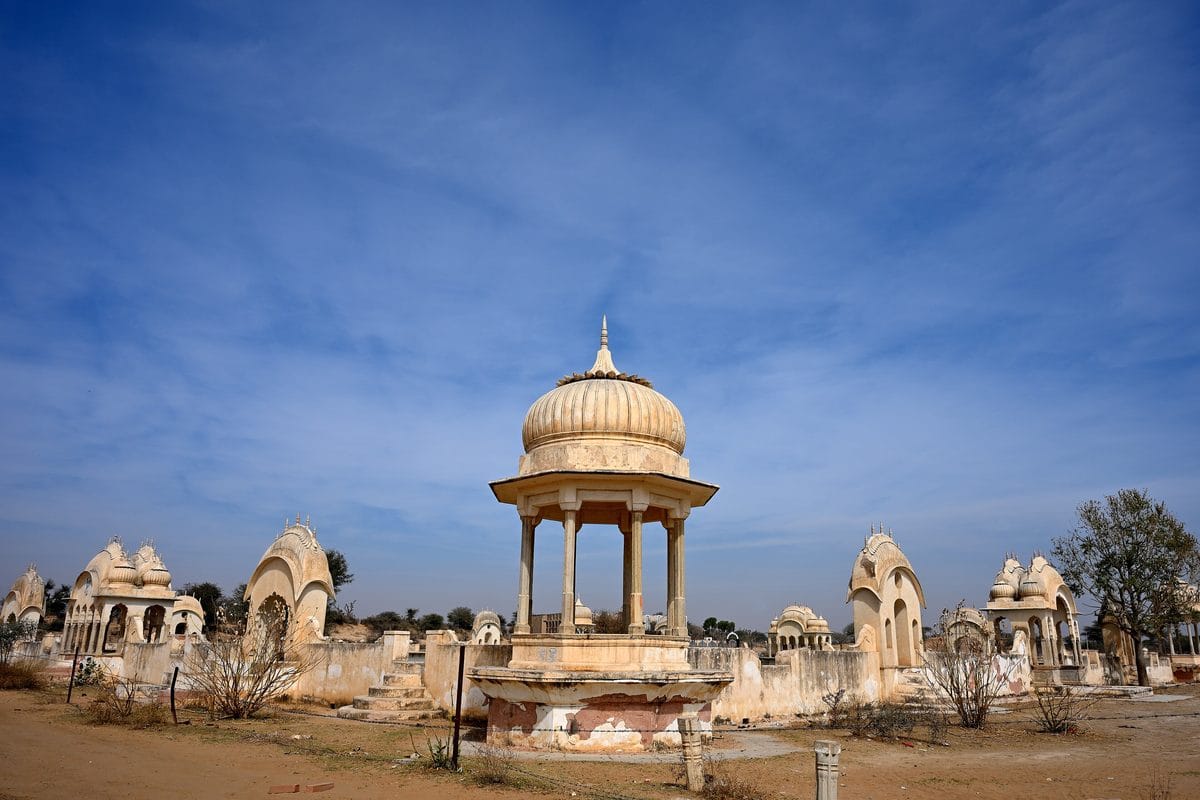
HistoryA few kilometres out of Churu — reports vary — lies Sethani Ka Johara, a calm and lovely old reservoir with a generous story behind it. In 1899-1900 Rajasthan was gripped by the famine remembered as Chhapaniya Akal, after the Vikram Samvat year 1956; grain and water vanished, and people and cattle alike began to die. The widow of the Churu-born merchant Bhagwan Das Bagla had this vast tank dug, both to put wages in hungry hands and to settle the water problem for good. Thousands, it is said, survived the famine on that work. Today its chhatris and migratory birds draw visitors instead.
Surana Haveli
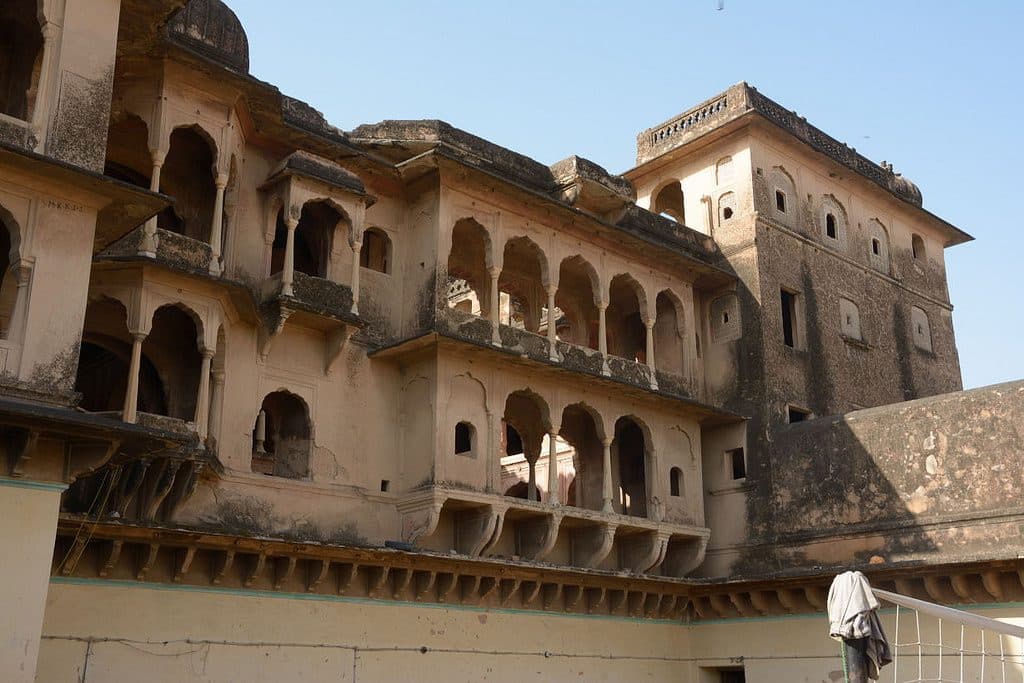
HistoryChuru is called a city of havelis, and Surana Haveli is the most singular of them all. Merchants of the Oswal Jain Surana family raised this six-storeyed mansion, by tradition around 1870, and its defining feature is a count that sounds invented: 1,111 windows and doors, or so the tally has always been given. That lattice of openings, it is said, was no mere ornament — it was shaped so air moved through every corner and the house stayed cool through the fiercest desert summer. Its walls carry frescoes of old Rajasthani romances such as the tale of Dhola and Maru, their colours still speaking.
Salasar Balaji Dham
History & legendIn the small town of Salasar, in Churu district, stands one of India's most revered Hanuman shrines, and the image within it is unlike any other. Tradition holds that in about 1754, in the village of Asota, a farmer ploughing his field struck something hard beneath the soil. When the earth was cleared away, an idol of Hanuman emerged, carved with a beard and a moustache — a form devotees say is found nowhere else in the country. That same night, the story goes, the saint Mohandas was shown in a dream where the image belonged, and the great shrine at Salasar grew from that moment.
Tal Chhapar Wildlife Sanctuary
History & legendTal Chhapar is a sweep of green grassland set improbably in the middle of the Thar, where herds of blackbuck run in the open and demoiselle cranes settle in for the winter. Local tradition holds that in the age of the Mahabharata this tract was called Dronpur, after Dronacharya, teacher of the Pandavas. In later centuries it was kept as a private hunting reserve of the Maharajas of Bikaner. Attitudes eventually changed, the value of protecting wildlife was understood, and the grassland was declared a fully protected sanctuary. Amid so much sand, it remains a blessing for every creature.
Keep going
Next on the road
Your Rajasthan Story Starts Here.
Tell us where you want to go. We will help you make the journey unforgettable.