
Har Mod ki Kahani
Sri Ganganagar
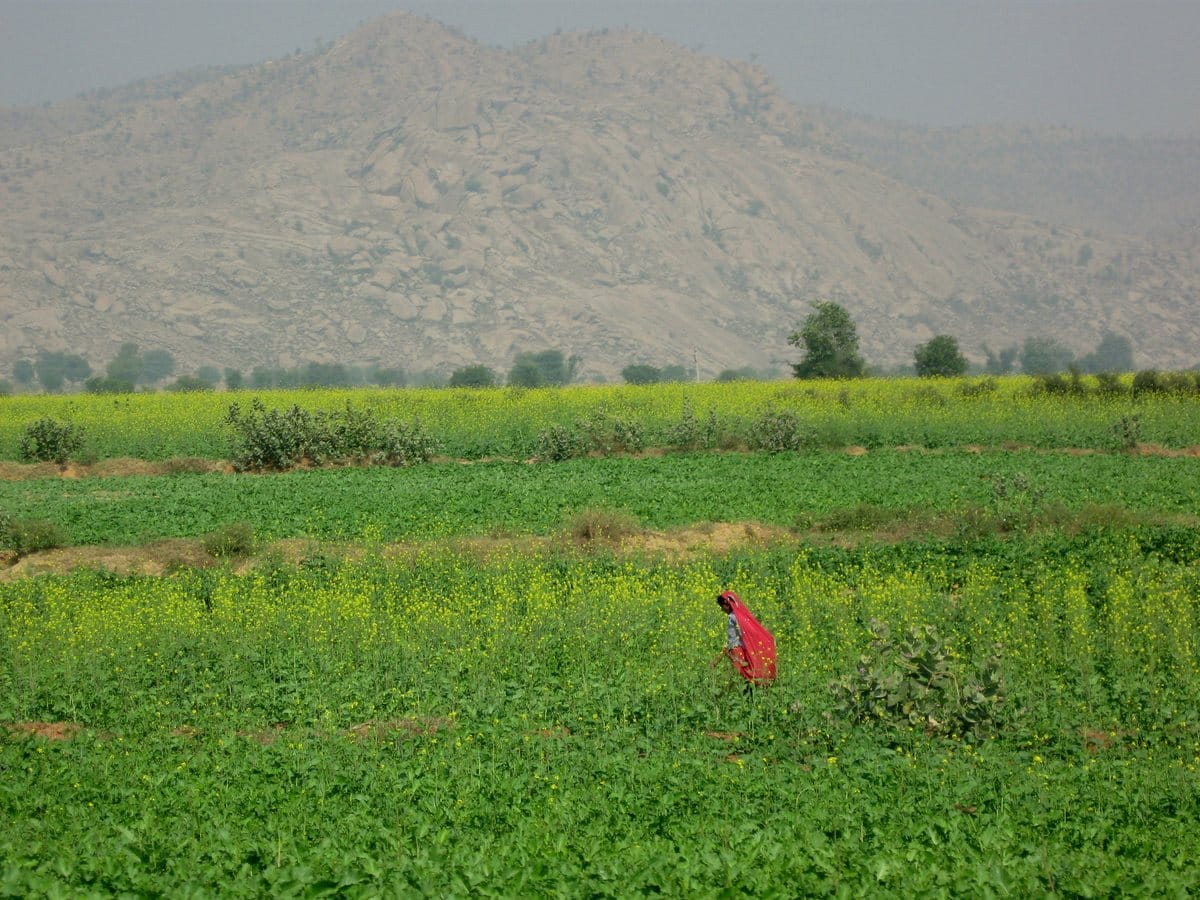
Sri Ganganagar, Rajasthan's northernmost district, sits right against the border with Pakistan, and water from the Gang Canal has turned this stretch of desert into a broad belt of green farmland. Its stories are just as varied: a tomb built on a love legend, a Sikh shrine beside a desert pond, an old fort on the Ghaggar, border posts, and buried remains of the Indus Valley Civilisation.
The stories
5 places, and what happened at each
Laila Majnu Ki Mazar
LegendIn Binjaur village of Anupgarh tehsil, some 120 kilometres from Sri Ganganagar, a tomb in the open desert is honoured as a shrine to undying love. Local belief holds that Laila and Majnu wandered as far as this wilderness and breathed their last here, which is how the spot became a pilgrimage for lovers. Every June a fair gathers around it, drawing married couples and sweethearts from far away who come to pray that their own bond lasts a lifetime. Once the sun drops, the silence here feels like an old ballad.
Buddha Johar Gurudwara
HistorySet in the Raisinghnagar area near Jaitsar, Buddha Johar is counted among the most revered historic Sikh sites in this corner of Rajasthan. It is said that the gurudwara was raised by Sant Fateh Singh. The memories preserved here belong to Bhai Sukha Singh and Bhai Mehtab Singh, who in August 1740 carried the head of Massa Ranghar, desecrator of the Harmandir Sahib, to this desert refuge, and to the Sikhs martyred here. A large johar, the traditional catchment pond that gives the place its name, lies within the complex. Between the desert wind, the still water and kirtan drifting across the courtyard, most travellers linger far longer than planned.
Anupgarh Fort
HistoryOn the bank of the Ghaggar, at Anupgarh town, this fort stands within reach of the India-Pakistan frontier. It is said to have been raised in the seventeenth century - most accounts credit Maharaja Anup Singh of Bikaner, whose name it carries, though some sources date it later and credit a Mughal governor - to hold the district against local uprisings. By tradition its walls watched over battles and the movement of troops. Today it is described as largely ruined, yet thick bastions and surviving gateways still sketch the outline of the old royal structure, most photogenic in the last light of afternoon.
Hindumalkot Border
History & legendSome 25 kilometres from Sri Ganganagar, this outpost sits on the international border with Pakistan. Local tradition takes its story back to 1914, when the princely state of Bikaner is said to have had the boundary surveyed and marked here. Hindumal, the state's diwan, was by that telling travelling in the area; he fell ill, it is said, and died on the spot, and in his memory the village, until then called Odki, was renamed Hindumal, which in time became Hindumalkot. Visitors now come to see the frontier from close quarters, look across the wire and watch the BSF jawans on duty.
Bror Village Archaeological Site
HistoryBeneath the fields of Bror village, near Anupgarh, lies a world thousands of years old. The site belongs to the Indus Valley Civilisation, and excavations here have brought up ancient pottery, beads and a range of Harappan-period objects. From the surface it looks like nothing more than a mound in the fields, but for anyone who loves history it is a small treasure house. Standing on it, you find yourself imagining the settlement that once worked and traded on this spot, a forgotten culture that grew along the now-dry course of the Ghaggar.
Keep going
Next on the road
Your Rajasthan Story Starts Here.
Tell us where you want to go. We will help you make the journey unforgettable.