
Har Mod ki Kahani
Jhalawar
Jhalawar district in Rajasthan is known for its water-wrapped landscapes, its orange orchards and a rich historical inheritance; it is nicknamed the state's Cherrapunji and its Nagpur. The town began in 1791 as a military cantonment raised by Jhala Zalim Singh, diwan of Kota, against Maratha raids, and by 1838 it had become a princely state in its own right under its first ruler, Rana Madan Singh.
The stories
7 places, and what happened at each
Gagron Fort
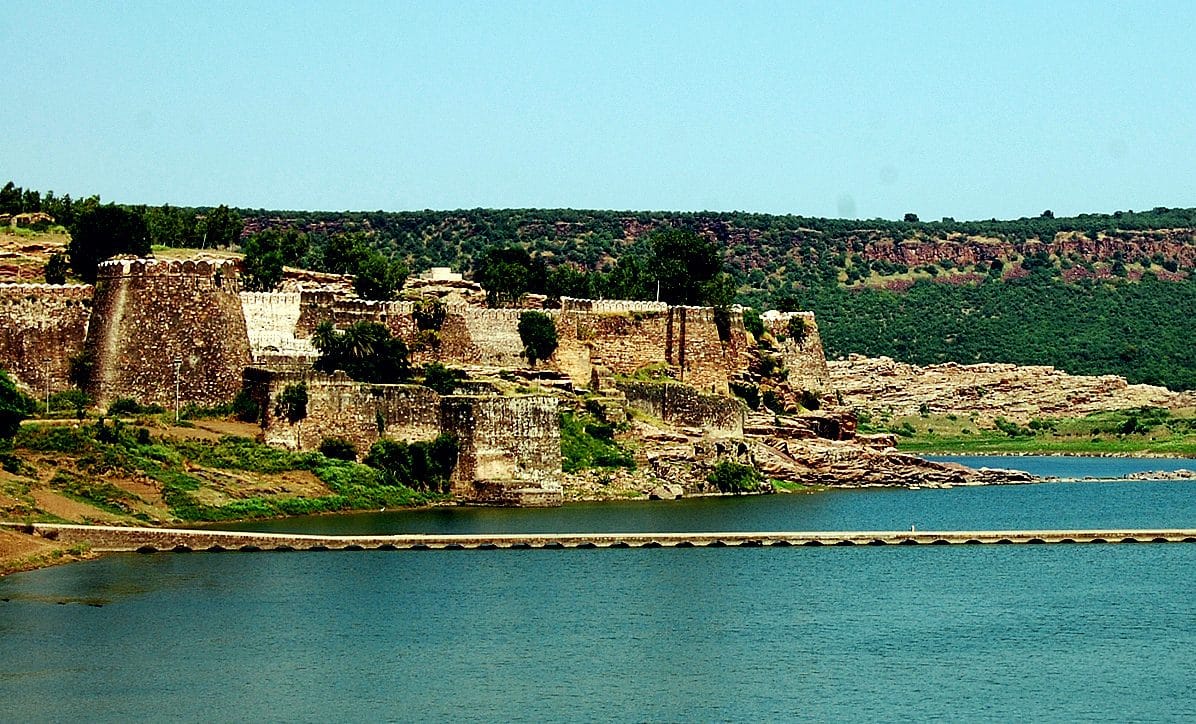
History & legendGagron is said to be India's only fort raised straight onto a rock face, with no foundation beneath it. The Ahu and the Kali Sindh wrap around three of its sides, which is why it is known as a jaldurg, a water fort. Tradition credits the Dod ruler Bijaldev with beginning it in the twelfth century, and holds that Khichi kings kept it for three hundred years. When invading armies reached the walls, thousands of Rajput women are remembered to have performed jauhar. It is now a UNESCO World Heritage site; the dargah of the Sufi saint Mitthe Shah stands at its gate, old temples to Krishna and Hanuman within.
Garh Palace
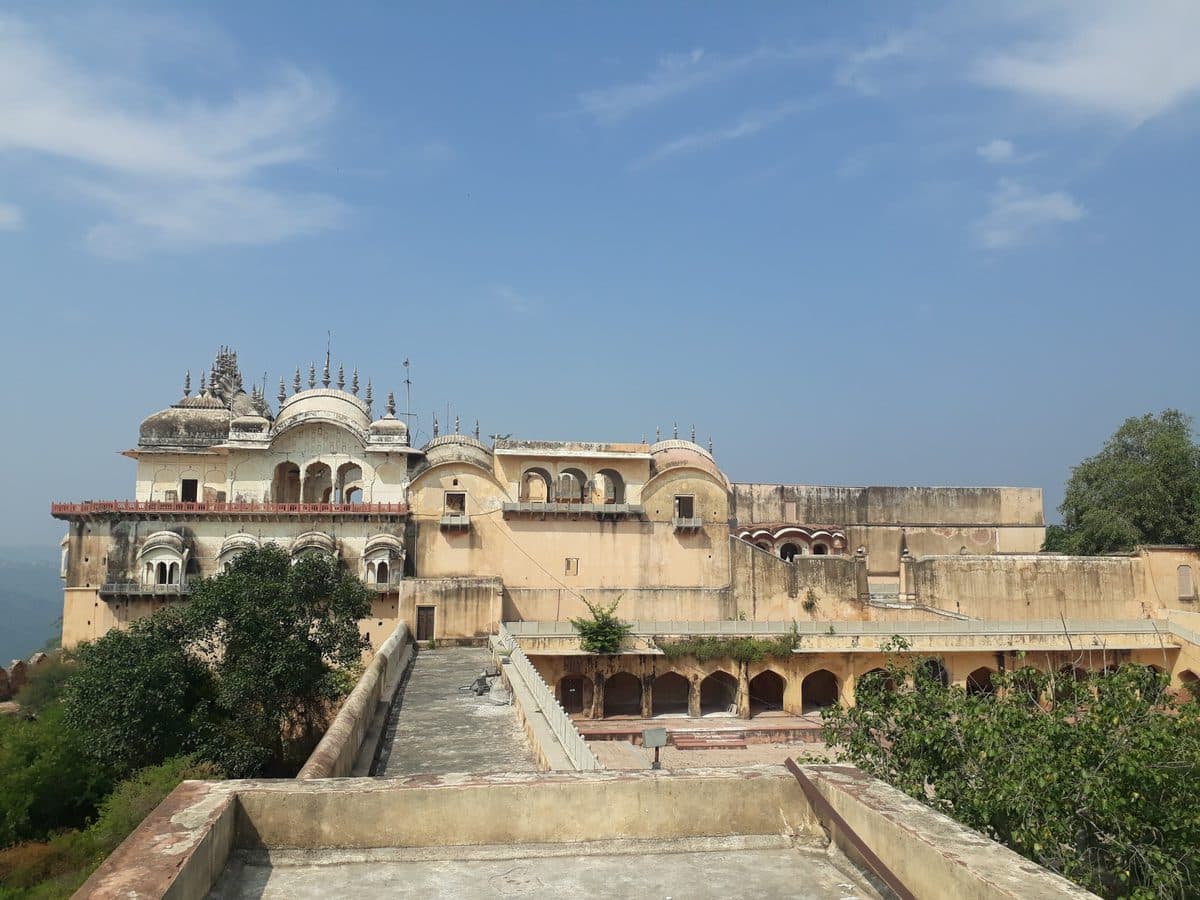
HistoryGarh Palace stands right in the middle of Jhalawar town, raised by Maharaj Rana Madan Singh as his royal residence and the seat of his administration. From the outside it reads as a fort; step inside and it opens up as a palace. Its real treasure is on the walls — delicate Hadoti-school paintings and murals whose colours have held their own remarkably well. Those painted rooms are not casually open to visitors: it is said that seeing them needs permission, so travellers who care about them tend to ask ahead rather than simply turning up and hoping.
Bhawani Natyashala
HistoryInside the Garh Palace complex at Jhalawar, Maharaj Rana Bhawani Singh built this theatre in 1921, and it is counted among the most unusual playhouses in India. Its plan borrowed from European opera houses and from Parsi theatre. The cleverest part is underfoot: underground passages run beneath the stage, so that mid-performance a chariot or a horse could rise into view as though surfacing from another world. In its day that was closer to conjuring than to stagecraft, and it is still easy to picture in the hush of the empty auditorium.
Sun Temple, Jhalrapatan
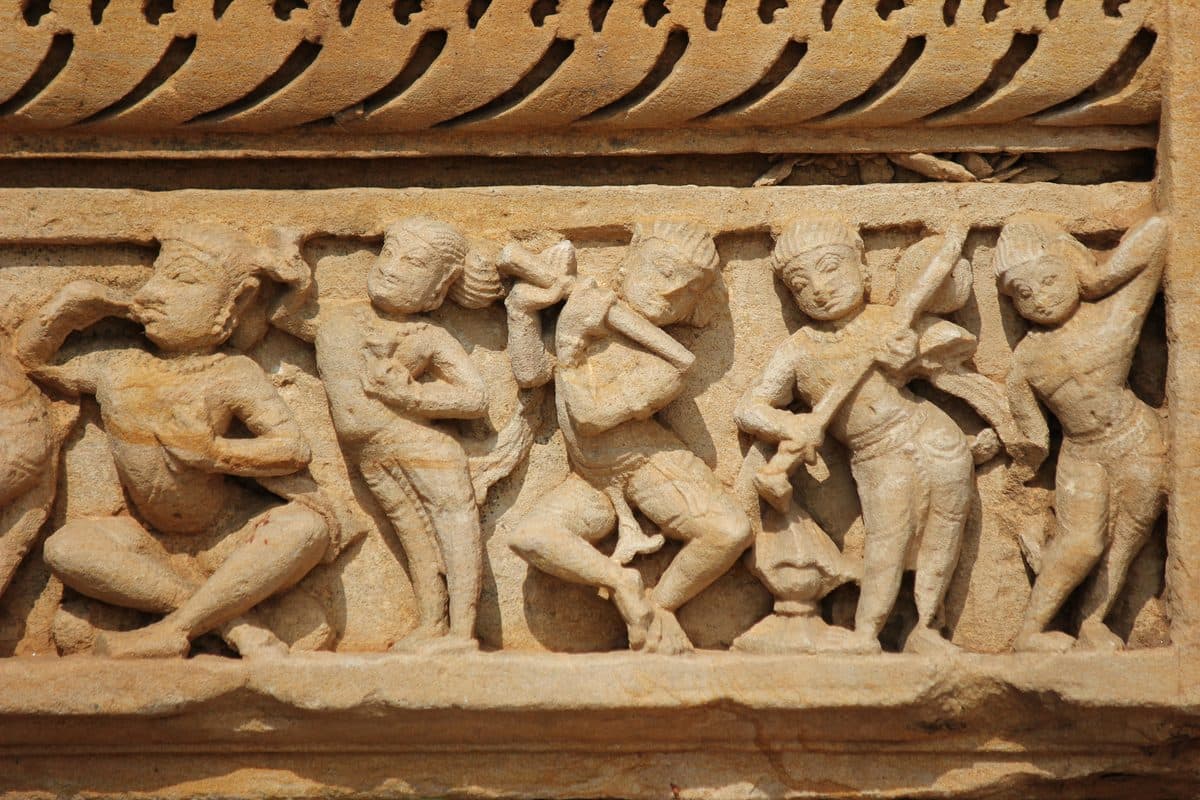
HistoryJhalrapatan, Jhalawar's twin town, is known as the City of Bells, and its tallest landmark is the Sun Temple. It is said to date from the 10th century, though sources differ on this; rising 97 feet, it is celebrated for its architecture. The carving across its spire, hall and outer walls, and the sculpted figures set into them, remind many visitors of the temples at Khajuraho. It is also called Saat Sahelian ka Mandir, the temple of the seven friends, and Padmanabh Temple. In early morning light the old stone takes on a warm golden cast.
Chandrabhaga Temple
HistoryThese old temples on the bank of the Chandrabhaga river are among the quietest corners of Jhalrapatan, and the fine carving on their pillars and arches rewards a slow look. One of the group, the Sheetleshwar Mahadev temple, is regarded as the earliest dated Shiva temple in Rajasthan — dated in the literal sense, carrying its year of construction inscribed on it — and it is today a nationally protected monument. On Kartik Purnima the riverbank fills for the Chandrabhaga fair and its livestock market, and the empty ghats turn briefly into a crowd of bathers and traders come from far away.
Buddhist Caves of Kolvi
HistoryCut into the hills near Kolvi village, some way out from Jhalawar, these rock-hewn Buddhist caves are quiet evidence of how far Buddhism once reached across India. They are usually said to belong to the Hinayana tradition, though sources do not all agree. Stupas and meditation chambers were carved directly out of the living rock, and monks once lived and practised here. The number of caves and the way they were shaped have earned the site the nickname the Ellora of Rajasthan. Because it lies well off the usual tourist routes, the silence that presumably drew those monks to these hills is still largely intact.
Sant Pipaji Panorama
History & legendBy tradition, Pratap Rao Khichi, ruler of Gagron, walked away from his throne to become a disciple of Swami Ramanand, and came to be known as Sant Pipaji. He is counted among the leading figures of the Bhakti movement. The panorama at Jhalawar sets out that journey in sequence — from ruler to renunciant — through paintings, sculpture and staged tableaux. For anyone moving between forts and temples all day, it is a change of register: less about stone and dates, more about a single life and the decision that turned it around.
Keep going
Next on the road
Your Rajasthan Story Starts Here.
Tell us where you want to go. We will help you make the journey unforgettable.